



⚕ This article explains the scientific factors that influence the cost of hypospadias surgery. Do not base your decision on price alone —...
Types of Inguinal Hernia in Children: Which Is the Most Dangerous? 2026
Receiving a diagnosis of an anorectal malformation for your newborn can be one of the most frightening moments for any parent. These are complex...
Seeing your child in sudden, severe abdominal pain is every parent's nightmare. Intussusception — a condition where one segment of the intestine...
Learning that your son has hypospadias or needs specialized circumcision care can feel overwhelming. These are among the most common conditions seen...
التواصل الأجتماعي:
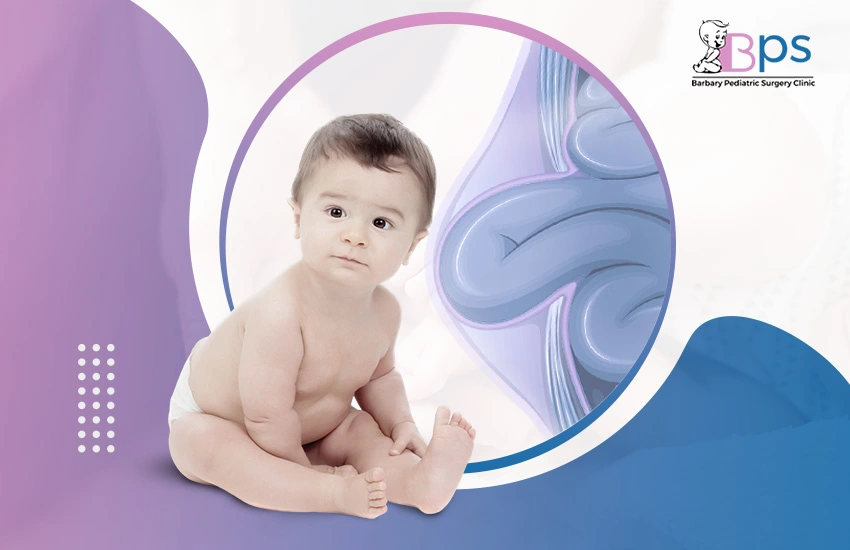
A bulge that appears near your child’s groin when they cry or strain, then seems to disappear when they rest — this is the hallmark presentation of inguinal hernia. But did you know there are different types? And that some carry significantly higher risk than others? Professor Mohamed Elbarbary, pediatric surgery specialist at Cairo University’s Kasr Al-Ainy Medical School and Fellow of the Royal College of Surgeons of Edinburgh (FRCSEd), breaks down the different types of inguinal hernia in children and explains which require the most urgent attention.
What Is Inguinal Hernia in Children?
An inguinal hernia occurs when abdominal contents — usually part of the intestine or, in girls, the ovary — protrude through a weakness or opening in the inguinal canal. During fetal development, the testicles in boys (and the round ligament in girls) travel through this canal. When the canal fails to close properly after birth, a hernia can develop.
Inguinal hernia is one of the most common surgical conditions in childhood. It affects approximately 1-3% of full-term infants and up to 30% of premature babies, with boys significantly more often affected than girls.
The Main Types of Inguinal Hernia in Children
Indirect Inguinal Hernia (Most Common in Children)
Indirect inguinal hernia accounts for over 95% of pediatric inguinal hernias. It is congenital in nature: the processus vaginalis — a small peritoneal pouch that accompanies the testis during its descent into the scrotum — fails to close after birth, leaving an open channel through which bowel or other abdominal contents can push into the inguinal canal or scrotum. Indirect hernias can occur on one or both sides.
Direct Inguinal Hernia (Rare in Children)
Direct inguinal hernia occurs through a weakness in the posterior wall of the inguinal canal. This type is common in adult men but is rare in children. When it occurs in childhood, it may be associated with connective tissue disorders or may develop after previous inguinal surgery.
Femoral Hernia (Very Rare, More Common in Girls)
Femoral hernia occurs just below the inguinal ligament, through the femoral canal. It is uncommon in children but more likely in girls. Femoral hernias carry a particularly high risk of incarceration and should be repaired promptly after diagnosis.
Symptoms Parents Should Watch For
- Reducible hernia (least urgent): A soft bulge that appears with crying or activity and disappears completely at rest.
- Incarcerated hernia (urgent — go to hospital): A firm bulge that does not go away at rest. The child is crying and cannot be soothed. The groin area is tender to touch.
- Strangulated hernia (emergency — go immediately): Severe worsening pain, the skin over the lump looks red or dusky, vomiting, the child appears very unwell. Time from strangulation to bowel death can be as short as 4-6 hours.
When Is Surgery Necessary?
For all types of inguinal hernia in children, surgery is the only definitive treatment. The timing depends on urgency: elective repair is scheduled within weeks to a few months for reducible hernias; urgent repair within 24-48 hours after successful manual reduction of incarcerated hernias; emergency repair immediately for strangulated or irreducible hernias.
How Is the Operation Performed?
Professor Elbarbary, with 36 years of experience in pediatric surgery at Cairo University, performs inguinal hernia repair using both open and laparoscopic techniques.
Open herniotomy is the gold standard for most pediatric inguinal hernias. A small incision is made in the groin crease, the hernia sac is carefully freed from surrounding structures, and ligated at its base. In girls, if the ovary has prolapsed into the sac, it is gently returned to the abdomen.
Laparoscopic repair is particularly useful for bilateral hernias, recurrent hernias, and hernias in girls. Most children are discharged the same day.
Life After the Operation
Recovery is rapid. Pain is minimal and managed with children’s paracetamol for 2-3 days. Feeding resumes within hours. Dissolving stitches — no removal needed. Keep the wound dry for 5-7 days. Avoid vigorous physical activity for 2-3 weeks. Recurrence rate in specialist centers is less than 1%.
Frequently Asked Questions
Which type of inguinal hernia is most dangerous in children?
A strangulated hernia is the most dangerous — a surgical emergency where blood supply to trapped bowel is cut off within hours. Any hernia that will not reduce in a distressed, vomiting child requires immediate emergency assessment.
Can an inguinal hernia in a child heal without surgery?
No. Unlike umbilical hernias, inguinal hernias in children do not close on their own and will eventually require surgery.
My daughter has an inguinal hernia — is this different from boys?
In girls, the ovary and fallopian tube are often inside the hernia sac, increasing urgency because the ovary’s blood supply can be compromised if incarcerated.
Is it safe to repair both sides in the same surgery?
Yes — bilateral repair in the same session is standard practice, avoids a second anesthesia, and is safe.
Book a Consultation with Professor Mohamed Elbarbary
If your child has been diagnosed with an inguinal hernia — or if you’ve noticed a groin swelling that concerns you — early specialist evaluation is the most important step. Professor Mohamed Elbarbary, FRCSEd, is a pediatric surgery consultant at Cairo University with over 36 years of specialized experience. He sees patients at his clinic in Sheikh Zayed (City Clinic, Gezira Plaza) and at Kasr Al-Ainy Medical School. To book an appointment, contact us through the website or call the clinic directly.
احجز موعدك
احصل على أفضل رعاية طبية لطفلك مع الدكتور محمد البربري
بيانات الاستمارة: مثل الصفحة الرئيسية
بيانات الاستمارة: مثل الصفحة الرئيسية