



Esophageal atresia in infants and newborns is a rare birth anomaly affecting one in every 4,000 babies. This is diagnosed when the esophagus which...
Treatment of GERD in infants caused by diaphragmatic hernia
Commonly, a newborn infant may develop a tracheoesophageal fistula, which is an abnormal passageway connecting the two organs (Trachea and...
Thyroglossal cyst in children and newborns (Also referred to as paediatric thyroglassal duct cyst) in one of the rare conditions that affect the...
The branchial cleft cyst is considered a birth defect that appears during the early fetal stages. And it appears after birth as a mass or pocket in...
Social Media:
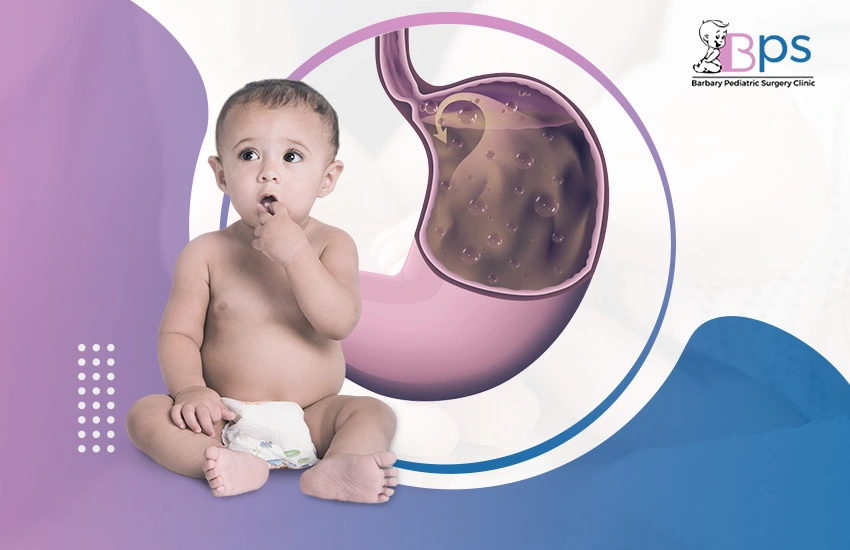
GERD in infants caused by diaphragmatic hernia is a medical condition that sometimes requires surgical intervention, especially if symptoms are severe and have not responded to conventional treatments.
Lately, one of the most prominent, and advanced method that achieved great success rates is Laparoscopic surgery for the treatment of Diaphragmatic hernia and Gastroesophageal Reflux Disease (GERD) in infants.
In this article, we will discuss the treatment of Gastroesophageal Reflux Disease (GERD) in children through laparoscopic surgery techniques.
Reasons for treating GERD in newborns through laparoscopic surgery
Laparoscopic GERD surgery is the optimal choice in cases where:
- Symptoms are unresponsive to traditional treatmements, like a customized nutrition plan or medication.
- The child is suffering clear complications, such as recurrent esophagitis, breathing difficulty, or weight loss.
- The existence of a large hernia in the diaphragm that heavy reflux of stomach content into the esophagus
In such cases, doctors recomment resorting to laparoscopic treatment, which proved its effectiveness in reducing the symptoms and achieving sustainable results for newborns suffering from GERD that is caused by diaphragmatic hernia.
Learn about: The relationship between GERD and Diaphragmatic Hernia in infants.
How the laparoscope is used in GERD treatment for infants.
Laparoscopic surgery is performed using delicate surgical tools as well as a small camera, which are inserted to the abdominal cavity through small surgical incisions through the following steps:
- Infant anesthesia: The surgery is performed under general anesthesia to ensure the infant feels no pain, with anesthesia administered under the supervision of specialists with extensive experience in handling infants.
- Inserting the laparoscope and surgical instruments: Small incisions are made in the abdomen, typically between 3 to 5 incisions, through which the surgeon inserts the laparoscope and specialized surgical instruments to perform the operation.
- Visualizing and repairing the hernia site: The surgeon uses the camera attached to the laparoscope to clearly view the interior of the abdomen, enabling precise identification of the hernia location.
- The surgeon gently pulls the stomach: Gently, the sugeon pulls back the stomach to its normal position below the diaphragm.
- Closing the diaphragmatic opening: After repositioning the stomach, the surgeon closes the opening in the diaphragm using surgical sutures, or in some cases a special mesh is used to support the area and ensure the hernia does not recur.
- Securing the stomach to prevent reflux: The surgeon sometimes performs an additional technique known as “fundoplication,” in which part of the stomach is wrapped around the lower esophagus to prevent acid and food from refluxing into the esophagus, thereby reducing reflux symptoms.
This is regarded as one of the most effective techniques in treating GERD in infants and newborns, and it has great benefits in speeding up the recovery and reducing the potential of complications occurring.
Benefits of treating GERD with the laparoscope.
Laparoscopic surgery is considered the optimal choice in treating GERD in infants who are born with Diaphragmatic hernia, since it is distinguished by a number of benefits, including:
- Reduced pain and faster recovery: This surgery is considered less painful than traditional open surgery, since the small incisions reduce trauma and accelerate the healing process.
- Smaller scars and better cosmetic results: The small incisions in laparoscopic surgery leave less visible scars, resulting in better cosmetic outcomes.
- Shorter hospital stay: Usually the newborn requires a short stay in the hospital post surgery to supervise his case, and in most cases, they can return home within two to three days after the operation.
- Long-term results: Laparoscopic treatment has proven effective in significantly and permanently relieving symptoms, as it reduces the risk of hernia recurrence and GERD symptoms, contributing to an improved quality of life for the child.
Read: When does GERD in children end?
Post surgery care
After the laparoscopic surgery is done, the infant requires some at-home care with the following precautionary measures to ensure complete recovery:
- The doctors instructions about the type of food given to the child must be followed closely, it is preferred to feed them smaller portion multiple times, while staying away from foods that are hard to digest.
- The child requires close follow up to ensure no unexpected symptoms are showing, like fever, hardship in breathing, because they might indicate additional doctor’s consultation.
- It is preferred to keep the infant or child in a comfortable position, and to avoid excessive movement that could cause pressure on the stomach area.
Probability of recovery and success rate
Following the laparoscopic technique in treating GERD in infants who are born with diaphragmatic hernia is considered a high success rate operation; especially when it is supervised by a highly experienced paediatric surgeon
In most cases, acid reflux disappears completely and the symtoms are cured to a high extent after the surgery, and studies show that infants who have undergone laparoscopic treatment of GERD feel a recognizable
Read more about: Your experience with GERD in Children
Finally,
Laparoscopic treatment of GERD in infants and children who are born with diaphragmatic hernia
Through close follow up and adequate post surgery care, the parents can help the child in recovering quickly, and returning to their normal life.
For more information about your child’s case and you can get in touch with Dr. Mohamed Elbarbary through his website, For comprehensive medical consultation to ensure your child’s health and comfort.
When does GERD in infants require surgical intervention?
Laparoscopic surgery is recommended when: symptoms do not respond to medications and dietary modifications, or the child suffers from evident complications such as recurrent esophagitis, breathing difficulty, and weight loss, or a large diaphragmatic hernia is present causing severe reflux of stomach contents into the esophagus.
كيف يُجرى علاج ارتجاع المريء بالمنظار؟
3 to 5 small incisions are made in the abdomen to insert the laparoscope and surgical instruments. The surgeon repositions the stomach below the diaphragm, The opening is closed with surgical sutures, and may perform “fundoplication” around the lower esophagus to prevent acid reflux.
What are the benefits of laparoscopic reflux treatment compared to open surgery?
Laparoscopic surgery is less painful, leaves smaller scars, requires a shorter hospital stay (two to three days in most cases), and achieves long-term results in reducing reflux and hernia recurrence.
ما مدة الإقامة في المستشفى بعد العملية؟
In most cases, the infant can return home within two to three days after surgery.
احجز موعدك
احصل على أفضل رعاية طبية لطفلك مع الدكتور Mohamed Elbarbary
بيانات الاستمارة: مثل الصفحة الرئيسية
بيانات الاستمارة: مثل الصفحة الرئيسية