



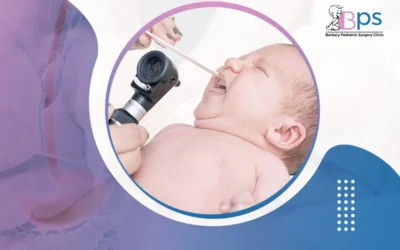
Esophageal atresia in infants and newborns is a rare birth anomaly affecting one in every 4,000 babies. This is diagnosed when the esophagus which...
Diaphragmatic hernia repair in children
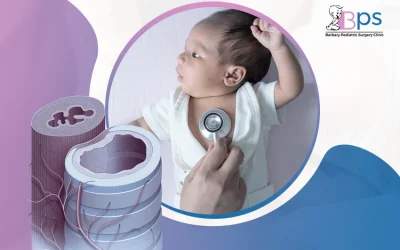
Commonly, a newborn infant may develop a tracheoesophageal fistula, which is an abnormal passageway connecting the two organs (Trachea and...
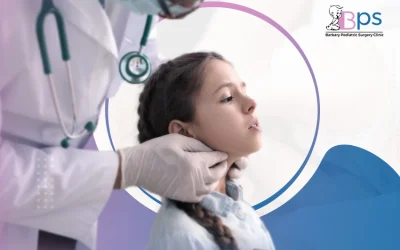
Thyroglossal cyst in children and newborns (Also referred to as paediatric thyroglassal duct cyst) in one of the rare conditions that affect the...
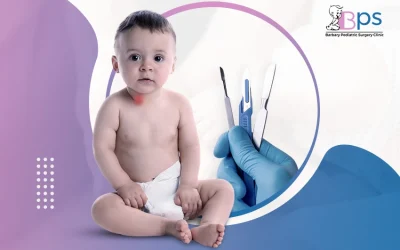
The branchial cleft cyst is considered a birth defect that appears during the early fetal stages. And it appears after birth as a mass or pocket in...
Social Media:
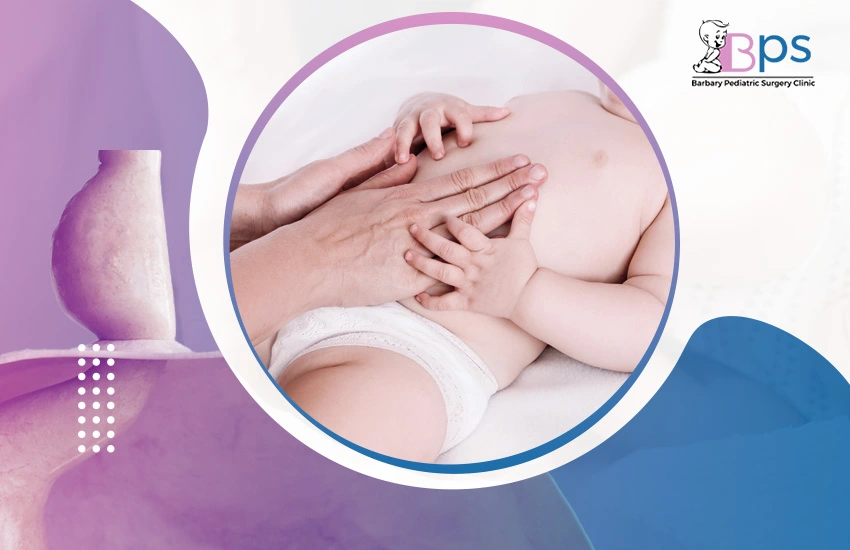
The organs located in the abdominal region, such as the stomach and intestines, may rise into the chest cavity, putting pressure on the lungs and heart in the event of incomplete development of the muscle that separates the abdomen from the chest and this is what is known as diaphragmatic hernia.
Diaphragmatic hernia affects one in 2500 children, and it could be diagnosed during the pregnancy period or after birth, and it can be treated through surgery. In our article today, we will discuss children’s diaphragmatic hernia repair surgery in details.
When should the diaphragmatic hernia repair surgery for children be performed?
The diaphragmatic hernia repair is considered an emergency surgery, a newborn diagnosed with diaphragmatic hernia is transferred to the intensive care unit immediately after birth to receive the required care and preparation for the operation.
The diaphragmatic hernia repair operation could be performed 2-3 days after birth, or postponed for 4-6 weeks, as the time of operation is decided by the paediatric surgeon depending on the overall health of the newborn and the size of the hernia, as well as the number of organs that moved from the abdominal to the thoratic area.
Why is the diaphragmatic hernia repair considered an emergency surgery?
Usually, most newborns who are diagnosed with diaphragmatic hernia suffer from problems in breathing due to protrusion of the stomach in the thoratic cavity, which leads to pressure on the lungs, as they also suffer from hardships in ingesting the required nutrition.
Likewise, a diaphragmatic hernia leads to high blood pressure in the pulmonary arteries and increased pressure on the heart, therefore, the surgery is considered an emergency for newborns as postponing it may lead to -god forbid- life threatening complications.
Read more about: GERD in newborns as a result of Diaphragmatic Hernia
How to prepare a newborn for a laparoscopic Diaphragmatic Hernia Repair surgery?
A child born with a diaphragmatic hernia is placed on a mechanical ventilator immediately after birth by inserting a tube into the trachea to help them breathe more efficiently Then, the child is transferred to the pediatric intensive care unit until their health condition stabilizes enough to undergo surgery, meanwhile, they undergo the following procedures and examinations:
- X-Ray imaging
- Blood analysis to determine the efficiency of lung functions
- Receiving blood pressure normalization medication
- Placing a tube in the artery to monitor blood pressure (Arterial Line)
- Inserting an IV catheter into the infant’s foot or wrist to deliver nourishment and drugs.
- Passing a tube from the mouth into the stomach to prevent air from entering the stomach. Which provides more space for the lungs to expand during the breathing process.
How is pediatric diaphragmatic hernia surgery performed?
The surgeon performs the paediatric diaphragmatic hernia surgery using a surgical laparoscope, which makes the surgery safer.
The surgery involves making several small incisions in the chest to insert the surgical laparoscope, which is a small video camera connected to a tube with an attached light source, that guarantees clear vision for the surgeon during the operation.
And by using the surgical laparoscope and other surgical equipment, the surgeon restores the organs -which is most commonly the stomach- back to their original position in the abdominal cavity, then hernia in the diaphragm is then stitched using surgical statures, and in case the hernia is too big, the surgeon uses a special surgical mesh to patch it.
What happens after the laparoscopic diaphragmatic hernia repair surgery?
The child stays on a ventilator in the paediatric intensive care unit after the surgery until completely recovered from the operation and is able to breathe normally again. The duration of staying on the ventilator depends on the efficiency of the lungs’ function.
After that, the child is fed through a special tube that extends from the nose or the mouth to the stomach for a few days after the surgery, until they are able to be fed normally through the mouth.
The child might need to be given some pain relief and antibiotic medication after the surgery, in addition to blood-pressure normalizing medication to reduce blood pressure on the lungs.
Read about: Harmful outcomes of Paediatric Diaphragmatic Hernia surgery.
What are the complications of Diaphragmatic Hernia Repair surgery?
The children who undergo Diaphragmatic Hernia Repair surgery can live a normal life afterwards, however, as in many surgerie, some complications may arise, like:
- Infection
- Bleeding
- Problems in breathing
- Fluid transfer from the wound to the abdominal cavity
- Damaging of one of the nerves or organs during the surgery
These complications rarely occur if the surgeon is well experienced in paediatric diaphragmatic hernia repair.
Learn about: How to prevent the complications of diaphragmatic hernia repair surgery?
The importance of post Diaphragmatic Hernia Repair surgery follow up procedures:
Usually, children who undergo diaphragmatic hernia repair surgery recover completely if they have no other health conditions, however, if the hernia is large and may cause some problems in breathing, this condition may entail connecting the child with oxygen equipment and feeding tubes, and receiving some medication for several months post surgery.
Which is why, in all cases, the child needs close professional follow-up after the diaphragmatic hernia repair surgery to supervise their condition and ensuring they are not suffering from any complications.
Frequently asked questions:
In the following section, we answer the most common questions surrounding the paediatric diaphragmatic hernia repair surgery.
Is the paediatric diaphragmatic hernia repair surgery dangerous?
The surgery itself is not dangerous -generally speaking- because it is performed using a surgical laparoscope which limits the complications and dangers. Furthermore, perfoming the surgery at the right time by an experienced surgeon makes it a successful operation with almost no dangers.
Can the diaphragm get herniated again after the surgery?
The diaphragm herniating again after the surgery is a rare possibility, and if it does herniate again, the child will undergo another repair surgery.
What is the success rate of the Laparoscopic Diaphragmatic Hernia Repair surgery?
Success rate of the Laparoscopic Diaphragmatic hernia repair surgery varies from one child to another following a number of factors including the length/size of the hernia, and the health condition of the child, and the extent of damage to the lung tissue, besides the skill of the surgeon, which plays a key role in the success rate of the operation.
How much does a paediatric diaphragmatic hernia repair surgery cost?
To calculate the cost of the paediatric diaphragmatic hernia repair surgery, the following factors are taken into consideration:
- The condition of the child’s health and the complexity of the surgery.
- Costs related to staying in the hospital, operation room readiness, medical equipment used during the surgery (consumables).
- Costs of examinations and medication.
- Anesthesilogist’s fees, medical crew supervising and caring for the case before and after the surgery.
In short,
a herniated diaphragm muscle is a birth defect that happens due to the incomplete development of the muscle, which causes a protrusion of some organs from the abdominal to the thoratic (chest) cavity, this in turn causes problems for children, such problems vary in their degree of danger depending on the size of the hernia, and in all cases, the diaphragmatic hernia repair surgery is considered the only treatment for such a defect.
For more information about the paediatric diaphragmatic hernia repair surgery you can get in touch with us through the numbers below, or you can book an appointment with Dr. Mohamed Elbarbary
Dr. Mohamed Elbarbary is recognized as a renowned consultant for paediatric surgery in Egypt He currently a Professor and consultant of paediatric surgery and endoscopy in Abou El Reesh Hospital, he is distinguished by his extensive experience and high skill in performing the most delicate pediatric surgeries
What is Diaphragmatic Hernia in Children?
Diaphragmatic Hernia in children and newborns is considered a birth defects that results from incomplete development of the diaphragmatic muscle (separating the abdomen and chest), which allows some of the organs like the stomach or the intestines to protrude or rise completely to the chest cavity, applying pressure on the lungs and heart. It affects one in 2500 newborns.
Why is the diaphragmatic hernia repair considered an emergency surgery?
Because the protrusion of abdomenal organs through the chest cavity applies pressure on the lungs, making breathing harder for the child, and increases the blood pressure in the pulmonary arteries and fatigues the heart. Postponing the surgery may be life threatening.
How is the child conditioned before the operation?
The child is put on a ventilator immideately after birth, then moved to the paediatric ICU, then undergoes x-ray imaging, blood analysis, blood pressure monitoring, and IV nutrition until his condition stabilizes enough for surgery.
How is the diaphragmatic hernia repair surgery performed?
The surgeon relies on a surgical laparoscope: Small incisions in the chest are made to allow for the insertion of the laparoscope and surgical equipment, the organs are restored back to their original position, the diaphragmatic hernia is closed by stitching or surgical mesh if it is a large hernia.
What happens after the diaphragmatic hernia repair surgery?
The child stays in the paediatric ICU on ventilators until they are able to breathe normally. Nutrition is provided through IVs, then gradually through mouth-feeding, While providing some medication to normalize blood pressure and breathing.
Could the diaphragm get herniated again after the surgery?
Possible but rare. If it happens, the child undergoes another surgery to repair the hernia.
Does the child require lengthy follow-up after the operation?
Yes. The child requires regular follow-up after teh surgery to monitor the development and functions of the lungs. Especially in cases where the hernia is larger. Some children may require external oxygen supply or feeding tubes for several months after the surgery.
احجز موعدك
احصل على أفضل رعاية طبية لطفلك مع الدكتور Mohamed Elbarbary
بيانات الاستمارة: مثل الصفحة الرئيسية
بيانات الاستمارة: مثل الصفحة الرئيسية